
Think about the last time you watched something on Netflix, ordered from Amazon or discovered a new artist on Spotify. You probably didn't give the experience much thought. And that's exactly the point.
Netflix knew what you might enjoy. Amazon made finding and ordering something effortless. Spotify introduced you to music you didn't even know you were looking for.
Now imagine opening a school website. You're greeted with generic messaging, an overwhelming navigation menu and a 40-page prospectus to download. Finding tuition fees takes five clicks. Booking a tour requires filling out a lengthy form. Suddenly, everything feels a little more complicated.
The challenge for schools is that parents don't stop being consumers when they start researching education.
Their expectations have been shaped by the digital experiences they interact with every single day. And those expectations don't disappear when they begin one of the most important decisions they'll make for their child.
In this blog:
From the way we shop to how we discover new content, consumer brands have raised the bar for what a great digital experience looks like. But what does that mean for schools, and how can marketing and admissions teams apply these lessons to their own parent journeys?
We'll take a closer look at:

The modern parent journey has changed. Have school websites kept up?
Choosing a school has always been a significant decision, but the way families research their options has evolved.
A generation ago, parents might have relied heavily on recommendations, printed prospectuses, campus visits, and conversations with admissions teams.
Today, much of that discovery happens independently, long before a family makes direct contact. Parents move between search engines, school websites, social media, review platforms, and conversations with other families. They're comparing options, looking for reassurance, and forming impressions at every interaction.
Research from Niche's 2025 Parent Pulse Survey highlights how important this independent research has become:
- 87% of surveyed parents used school review platforms during their research.
- 75% researched school websites.
- 86% said personalized emails would positively influence their interest in enrolling their child.
These findings point to something important: the parent journey doesn't begin with an inquiry form or campus tour. It begins much earlier, often through a series of digital interactions that shape how families feel about a school.

Your school isn't just competing with other school websites.
According to McKinsey research, 71% of consumers expect personalized interactions, while 76% become frustrated when these don't happen.
That doesn't mean parents expect schools to make admissions feel like online shopping. But they increasingly recognize when an experience is unnecessarily complicated, impersonal, or difficult to navigate.
For school marketing and admissions teams, this shifts the conversation from providing information to designing experiences around the people using them. And some of the most useful lessons come from industries that have spent years rethinking exactly these challenges.
IS YOUR SCHOOL WEBSITE KEEPING UP?
Parents expect intuitive, personalized, and seamless digital experiences. Your school website should be no exception.
At Ubiq, we combine creative design, meaningful storytelling, and intelligent personalization to help schools stand out, connect with prospective families, and turn first impressions into lasting relationships.
Ready to create a digital experience that meets modern parent expectations and makes your school impossible to overlook?
Let's chat →

10 brands shaping what parents expect from schools.
From personalized recommendations to real-time updates, some of the world's most recognizable brands have fundamentally changed what people expect from their digital experiences.
These expectations aren't limited to shopping, entertainment, or travel. They follow parents into the school admissions journey, influencing how they explore options, engage with content, and decide whether to take the next step.
So, what can schools learn from the brands families interact with every day?

Netflix has taught parents to expect personalization. Tailored recommendations make finding relevant content feel effortless. Schools can apply this by creating personalized admissions pathways that reflect a family's interests, grade level, and priorities.

Amazon has taught parents to expect simplicity. Intuitive search, helpful filters, and streamlined checkout remove unnecessary friction. School websites should make it just as easy to find tuition information, explore programs, and schedule a campus tour.

Spotify has taught parents to expect discovery. Features like Discover Weekly introduce listeners to things they didn't know they'd love. Schools can encourage similar exploration through student stories, related content, and interactive experiences that reveal what makes their community distinctive.

Zillow has taught parents to expect transparency. Families can explore properties, compare options, and access detailed information before speaking to an agent. Schools can build the same confidence through accessible fee information, admissions requirements, virtual tours, and honest insights into school life.

Uber has taught parents to expect real-time updates. From estimated arrival times to journey tracking, Uber removes uncertainty by showing customers what's happening next. Schools can provide that reassurance with clear admissions timelines, application updates, and timely communications.

Target has taught parents to expect flexibility. Delivery, pickup, and Drive Up give customers control over how they shop. Schools can offer similar choice through virtual information sessions, flexible campus tours, and multiple ways to connect with admissions teams.

TikTok has taught parents to expect authenticity. Short-form, personality-driven content often feels more relatable than polished corporate messaging. Schools can bring their communities to life through candid student perspectives, behind-the-scenes moments, and authentic video storytelling.

Airbnb has taught parents to expect experiences they can imagine themselves in. Photography, detailed descriptions, and guest reviews help people picture a destination before they arrive. Schools can use immersive storytelling, student experiences, and virtual campus content to help families imagine their child's future.

Duolingo has taught parents to expect engaging interactions. Progress tracking, bite-sized activities, and playful design make the experience feel rewarding. Schools can introduce thoughtful interactive elements, such as personalized content journeys, quizzes, and tools that encourage prospective families to explore.
Disney has taught parents to expect consistency across every touchpoint. From digital platforms to physical experiences, its recognizable storytelling helps create a cohesive brand experience. Schools can build the same sense of connection by ensuring their website, communications, campus visits, and admissions experience tell one consistent story.
The common thread? These brands consider how people want to feel, what they need at each stage, and how to make every interaction more intuitive and engaging.
For schools, the opportunity isn't to replicate these experiences exactly. Where's the fun in that? It's to take the principles behind them and apply them to a decision that's far more personal: choosing where a child will learn, grow, and belong.

The technology behind better parent experiences.
There's something else these brands have in common: their digital experiences are supported by technology working behind the scenes. Netflix uses recommendation algorithms to surface relevant content. Amazon uses connected data to simplify shopping. Spotify uses AI and machine learning to help listeners discover something new.
For schools, delivering similarly intuitive experiences doesn't mean investing in technology for technology's sake. It means using the right tools to better understand families, anticipate their needs, and remove friction from the admissions journey. And AI is opening up new opportunities to make that possible.
Rather than presenting every website visitor with exactly the same experience, schools can use first-party data and personalization to surface relevant content, understand engagement, and create more meaningful digital journeys.
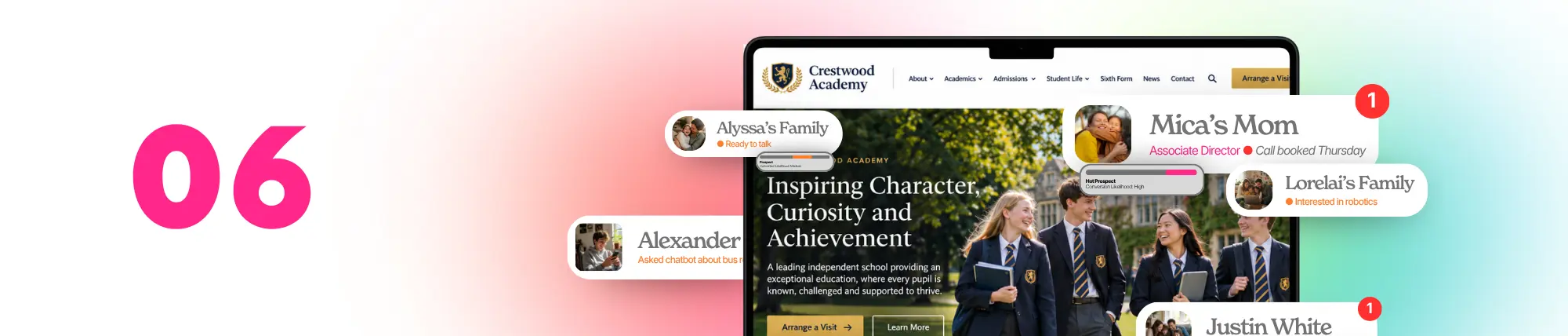
This is where technology like Ubiq's AMAIS™ Digital Experience Platform comes in. Built specifically for schools, AMAIS™ connects website experiences with data, insights, and marketing capabilities, enabling teams to understand visitor behavior, personalize content, and create more responsive digital experiences.
And with MAISY, Ubiq's native AI Co-Creator, technology can support the teams behind those experiences, too. Built directly into the platform, MAISY brings together specialist AI agents to support content creation, design, SEO, social media, research, and other everyday marketing tasks.
For busy school marketing and admissions teams, that means more capacity to deliver the relevant, engaging experiences families increasingly expect, without adding more disconnected tools or administrative work.
Need more hands, not more tools?
See how AI Co-Creation can give school marketing and admissions teams more capacity to create, optimize and get more done, without adding another platform to the pile.
Explore Co-Creation in action →

But choosing a school isn't like choosing a new series.
There's an important distinction. Parents aren't choosing a school because an algorithm recommends it. And selecting a school isn't a transaction that should be reduced to the fewest possible clicks. It's a deeply personal decision involving trust, aspirations, belonging, and a child's future.
That's not to say AI isn't influencing the process. As parents increasingly turn to tools like ChatGPT and other large language models (LLMs) to research schools, compare options, and ask more specific questions, AI is becoming another touchpoint in the modern parent journey. But while these tools can help families narrow their choices, they can't replace the feeling of finding a school that's right for their child.
The answer isn't for schools to become Netflix, Amazon, or Uber. It's to recognize what these brands have taught people about good experiences and apply those lessons thoughtfully and intentionally.
Personalization should feel relevant, not intrusive. Convenience should remove unnecessary friction, not meaningful human interaction. Technology should build confidence rather than replace conversations.
The best school digital experiences combine the expectations of modern consumers with the emotional intelligence that education demands.
It's time to rethink the school digital experience.
For school marketing and admissions teams, the question is no longer whether a website looks good or contains the right information. It's whether the experience reflects how modern families actually discover and evaluate schools.
Does it recognize different parent priorities? Make information effortless to find? Encourage discovery? Provide reassurance? Create meaningful opportunities to connect?
Your school's website isn't being experienced in isolation. It's being visited by families accustomed to some of the world's most intuitive digital platforms. And while they might not consciously compare your admissions journey with ordering from Amazon or tracking an Uber, they'll certainly notice when something feels unnecessarily difficult.
At Ubiq, we believe school websites should do more than present information. They should create distinctive, intuitive experiences that connect with families and turn interest into meaningful engagement.
Challenge the expected.
Bold ideas aren't born from following the crowd.
Across the UK and US, Ubiq X LIVE brings together school marketing, admissions, and commercial leaders with bold thinkers from inside and beyond education to challenge convention and explore new possibilities.
From rewriting the blueprint in London to coloring outside the lines in Miami, both events are designed to spark fresh thinking, meaningful conversations, and ideas you can take back to your school.
Frequently Asked
Questions
| How have parents' expectations of school websites changed? |
|---|
| Parents increasingly expect school websites to offer the same intuitive, personalized experiences they encounter with consumer brands like Netflix, Amazon, and Spotify. This means easy navigation, relevant content, transparent information, and simple ways to take the next step. For independent and international schools, meeting these expectations can help create stronger first impressions and more engaging admissions journeys. |
| How is AI changing the way parents research schools? |
| AI-powered tools like ChatGPT and other large language models (LLMs) are introducing new ways for parents to discover, research, and compare schools. Families can ask detailed questions about academic programs, tuition, facilities, and school culture, potentially encountering schools through AI-generated answers before visiting their websites. This makes clear, accessible, and well-structured website content increasingly important for schools looking to strengthen their digital visibility. |
| What makes a good digital experience for prospective parents? |
| A strong school digital experience combines intuitive navigation, relevant content, engaging storytelling, accessibility, and clear admissions pathways. Parents should be able to find important information, understand what makes a school distinctive, and take the next step without unnecessary friction. The best experiences also create opportunities for authentic connection, helping families imagine their child's future within the school community. |
| What is the role of personalization in school admissions? |
|
Personalization helps schools deliver information and experiences that reflect a family's specific interests, priorities, and stage in the admissions journey. Rather than presenting every visitor with identical content, schools can tailor pathways around grade levels, academic programs, extracurricular interests, or boarding options. Platforms like Ubiq's AMAIS™ Digital Experience Platform can help schools create more connected, relevant digital experiences. |
 |
Meet The Author: Molly Johnston, Content Marketing Manager With over a decade of experience in marketing, Molly specialises in turning complex ideas into clear, engaging content that helps brands communicate with clarity and impact. She creates content that resonates with real audiences, helping schools connect more meaningfully with families at every stage of their journey. Outside of work, she’s usually cooking something overly ambitious or being managed by four cats; a setup that keeps things entertaining, and her clothes permanently covered in fur. |